NIRxWINGS2
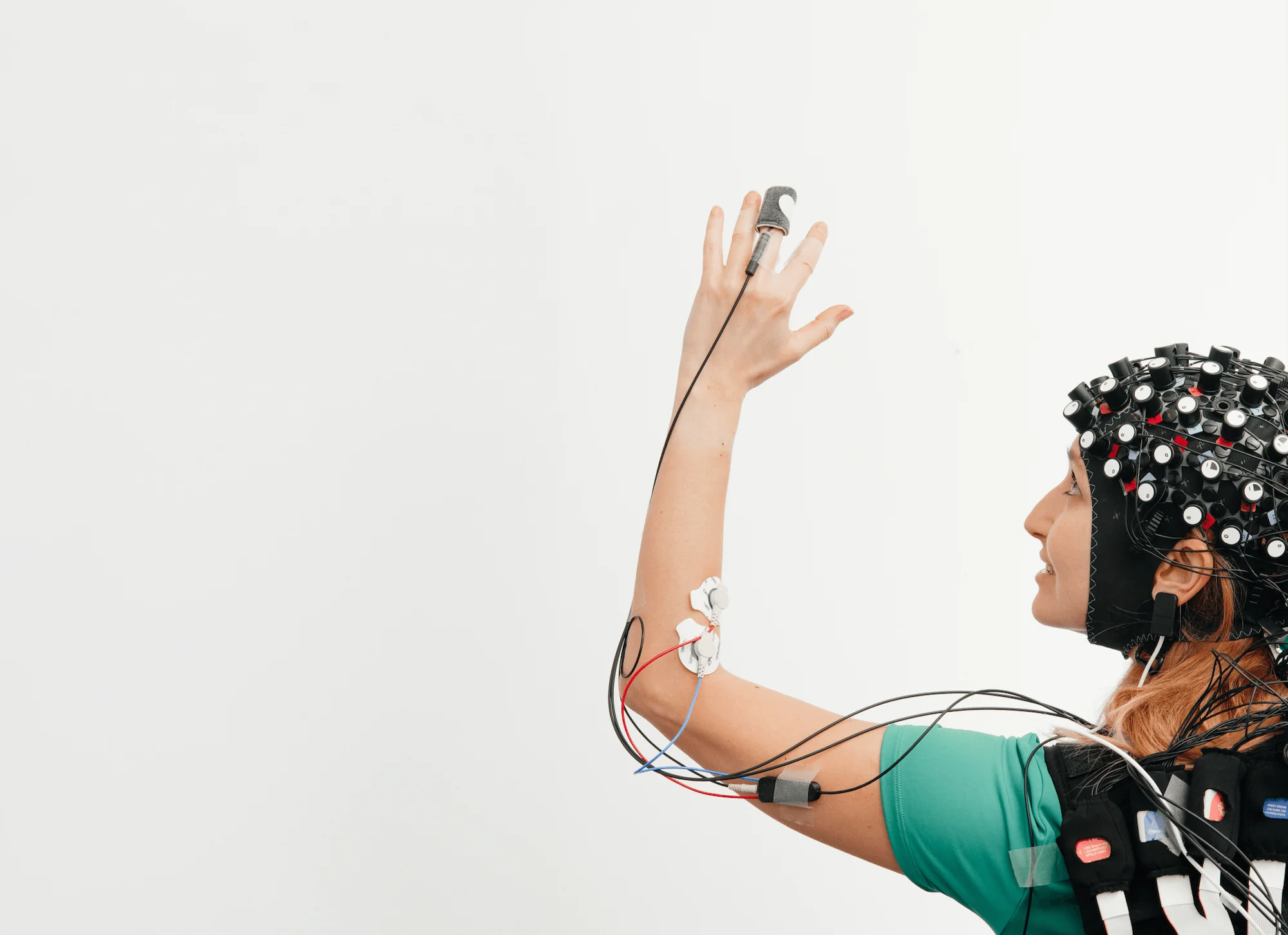
Wireless physiological sensor module for synchronized recording of respiration, ExG, electro dermal activity, temperature, and pulse data alongside fNIRS measurements in laboratory and mobile research environments.
The ideal in fNIRS research is that we measure only the evoked hemodynamic response. In reality, non-evoked, systemic activity is also present. To ensure we completely isolate the metabolic brain activity (i.e., HbO and HbR) due to the task we are interested in, we can measure peripheral physiological data (e.g., heart rate, respiration, tonic/phasic skin conductance, SpO₂). These additional signals help explain more variance in the fNIRS signal, improving research outcomes. With NIRxWINGS2, you can move outside the lab into complex, dynamic, and multi-sensory real-world environments to conduct Systemic Physiology-Augmented fNIRS (SPA-fNIRS). The system enables new experimental paradigms and the creation of high-quality research databases.